SaaS and technology companies are among the heaviest exhibitors globally. SaaStr, Web Summit, CES, GITEX, MWC Barcelona, RSA, AWS re:Invent. The average booth at a major tech conference costs between $30,000 and $250,000 when you include the stand, travel, accommodation, and swag.
The irony is that technology companies, who build software for a living, often run their own booth operations on spreadsheets, Slack threads, and post-it notes.
The demo-to-pipeline gap
At a tech conference, most booth interactions are demos. A prospect stops by, a rep gives a 10-minute demo, collects their details, and moves on. The problem is the gap between the demo and the follow-up.
The rep remembers the first three demos of the day clearly. By demo number fifteen, they blur together. "Was it the fintech company that wanted API access, or the healthcare one?" Without structured notes captured at the point of contact, the quality of follow-up degrades dramatically.
Badge scanners are not enough
Most conference organizers offer badge scanning. The rep scans a badge, and after the show, the company gets a CSV with names, titles, companies, and emails. This feels productive but it misses everything that matters: What did you talk about? What problem are they trying to solve? Are they evaluating competitors? What is their timeline? Who else is involved in the decision?
A badge scan without context is just a cold email list with extra steps.
A better model
The companies that convert the most conference leads share three habits:
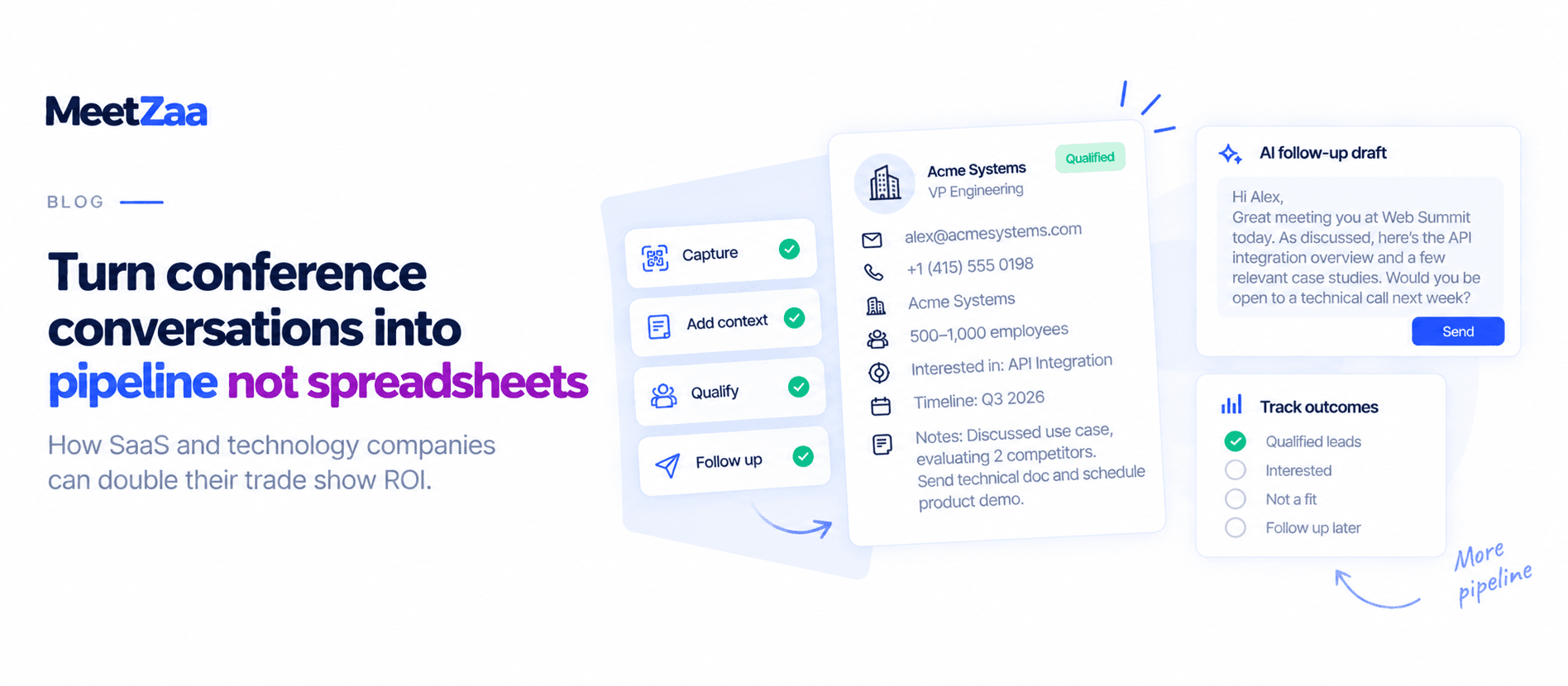
They capture context during the interaction, not after. This means the rep records the key details right after the prospect walks away: what product they were interested in, what their main objection was, and what they agreed to as next steps. Voice recording makes this fast enough to do between demos.
They qualify in real time. Not every badge scan is a lead. Some people are students, some are competitors, some are journalists. Tagging each interaction with an outcome (qualified, interested, not a fit, junk) means the sales team works a clean list on Monday instead of spending half the week sorting.
They brief reps before scheduled meetings. If a VP of Engineering from a target account has a 2 PM meeting at the booth, the rep should know who they are, what the company does, and any history with your product before they walk up. A 60-second brief powered by your CRM data or LinkedIn changes a cold handshake into a warm conversation.
Post-show execution
The biggest competitive advantage in conference sales is speed of follow-up. Most vendors take 5 to 10 business days to follow up after a conference. The ones that follow up the same day, with a personalized message referencing the specific conversation, close at dramatically higher rates.
This is where AI changes the game. If your reps captured voice notes during the show, AI can turn those into personalized follow-up emails in seconds. Not templates, actual personalized messages that reference what was discussed. The rep reviews, edits if needed, and sends. By 6 PM on day one of the conference, every prospect who visited the booth has a relevant email in their inbox.
The technology exists to turn a conference booth from a $100,000 brand exercise into a $100,000 pipeline machine. Most companies just have not connected the dots yet.
Walk out of the show with every lead already moving
Scan the card, say what was discussed, and the follow-up is drafted before your rep reaches the next stand. Works offline.
Keep reading
Automechanika Dubai 2026 exhibitor guide: the auto exporter's buyer map
Automechanika Dubai 2026 runs 10 to 12 November and has moved to Expo City. Here is the distributor-to-OEM buyer map so an exporter pitches each buyer right.
Best Trade Show Lead Capture Apps in 2026
An honest comparison of Blinq, iCapture, Captello, Momencio, Cvent LeadCapture and MeetZaa — what each costs, who each suits, and where scanner rental still wins.
Arab Health exhibitor guide: capturing high-value medical leads
An Arab Health exhibitor guide for 2027, now World Health Expo Dubai, with the dates, a regulatory-buyer checklist, and how to capture high-value leads.