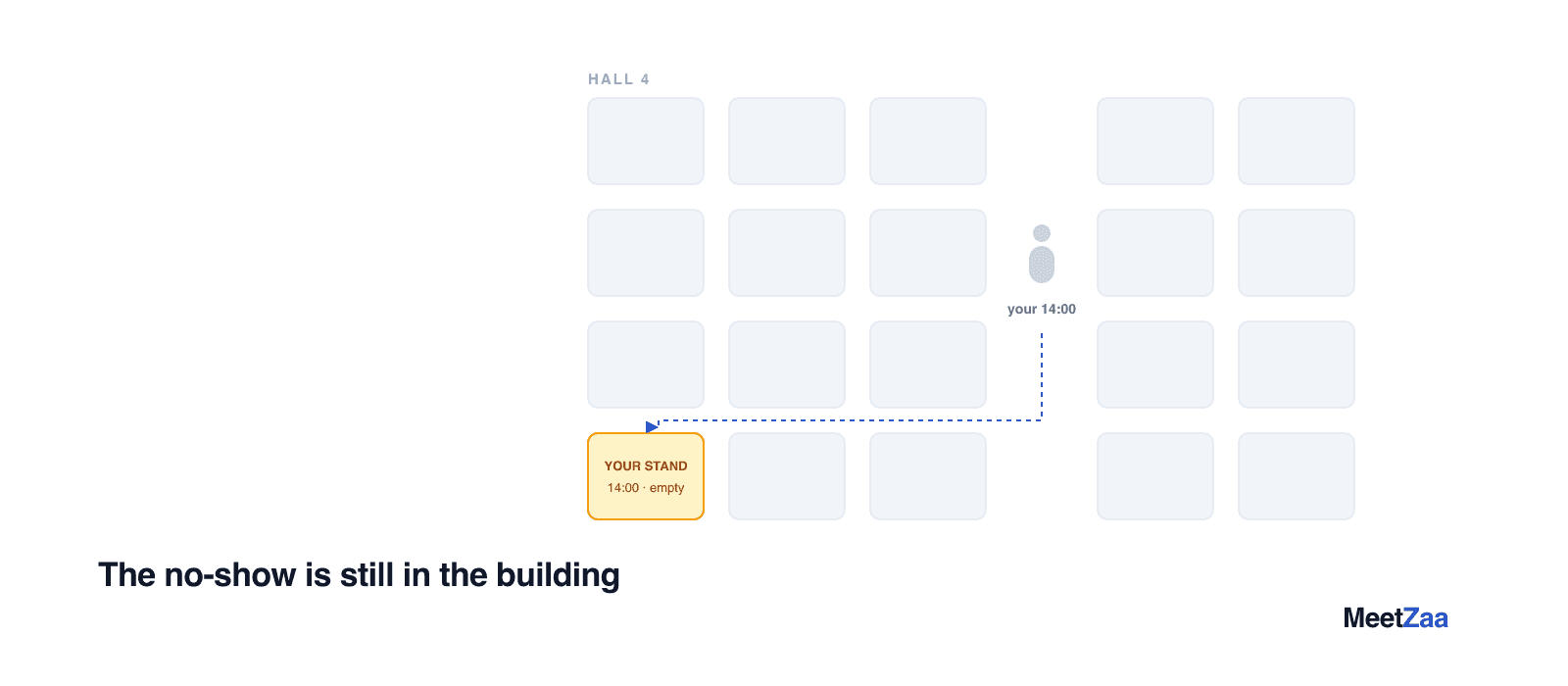
Day two, 14:00. The Saudi distributor who booked this slot five weeks ago is not at your stand. His badge was scanned at the entrance this morning, so he is in the hall. Your rep waits ten minutes, then takes a walk-in, and the 14:00 line on the printed schedule stays exactly as it was.
By evening, nobody remembers it was ever a meeting. Yet a trade show no-show is not a dead lead. It is the most recoverable meeting of your whole show, and most exhibitors let it vanish because nothing on the stand records that it happened.
The buyer who missed you is still in the building
When a trade show meeting is a no-show, send a short message within the hour with your stand number and two new times, mark the miss somewhere it can be chased, send that evening's follow-up written for a miss rather than a meeting, and look for the buyer at the show the next morning.
That answer only works because of the thing that makes a stand no-show different from every other kind. The advice you find for missed sales meetings is written for video calls, where the prospect has closed the tab and gone back to their day. Your no-show has done nothing of the sort.
A video-call no-show is gone. A stand no-show is two aisles away.
They travelled to the same city, paid for the same badge, and are walking the same halls for another day or two. Their diary is still open, and the thing they wanted from you five weeks ago has not changed.
Very few of them are avoiding you. Most simply got caught in a meeting that ran long, three aisles from yours.
of pre-booked stand meetings actually happen. The rest are yours to recover.
As per the data, out of 80 to 90 percent of meetings booked before a show: one or two of every ten booked meetings end as an empty chair. Meetings booked during the show hold up better, at 90 to 95 percent. No stand gets to zero. The question is what happens to the misses.
Why a stand no-show vanishes without a trace
On most stands, the record of the day is a printed schedule, a spreadsheet, or the organiser's badge scanner. All three share the same blind spot: they only record people who turned up. A scanner cannot scan someone who never arrived, and a printed 14:00 line looks identical whether the meeting happened or not.
So the miss leaves nothing behind. There is no record to chase, no reminder the next morning, and no trace by the time the team is writing up the show. The buyer who booked five weeks ago, the warmest kind of lead a stand ever gets, exits the show as a stranger.
40% of pre-booked meetings are always no-shows. MeetZaa helps you reduce to No Show percentage and also follow-up once they meet.
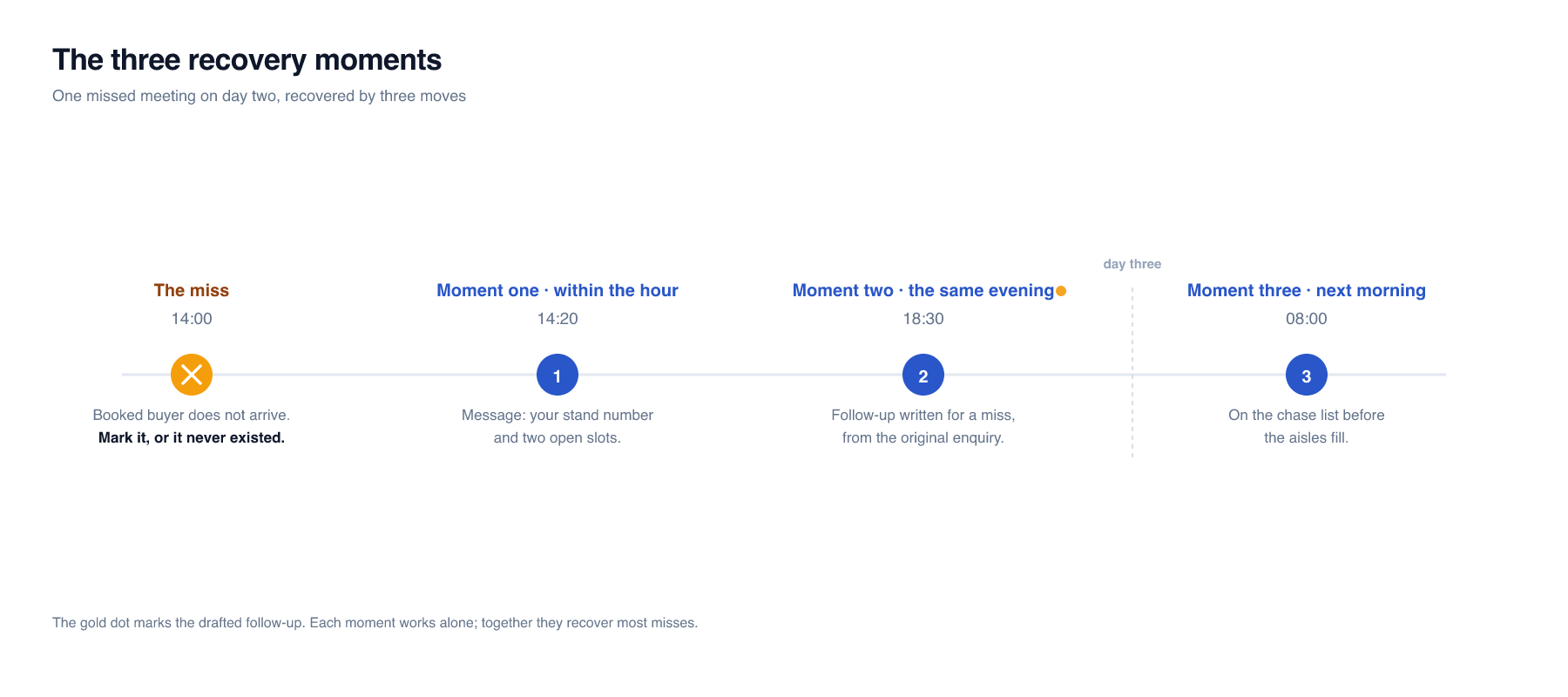
The three recovery moments
The three recovery moments is a simple rule: a missed stand meeting can be recovered within the hour, in that evening's follow-up, and at the show the next morning, and each moment needs one specific move.
The first moment is the hour after the miss. The buyer is still in the hall, and a short message can catch them before their day hardens. Name your stand, offer two concrete times, and stop there. No guilt, no essay.
The second moment is the same evening, when your follow-ups go out. A no-show must not get the "great to meet you today" template. To someone who never met you it reads as a mail merge, and it quietly tells them your other emails are templates too.
Write it for a miss instead: reference the enquiry that made them book, and offer tomorrow morning at the stand or a call after the show.
The third moment is the next morning, before the aisles fill. If yesterday's misses are on a list, someone can watch for them, or walk to their stand if they are exhibiting too. A face at 09:00 recovers meetings that no email would.
| Recovery moment | When | The move | Why it works |
|---|---|---|---|
| Within the hour | Before their day hardens | Message with your stand number and two open slots | They are still in the hall and their diary is still fluid |
| The same evening | When follow-ups go out | An email written for a miss: their original enquiry, two ways to reconnect | It reads as attention, not a mail merge |
| The next morning | 08:00, before the aisles fill | The miss on a chase list, with a name watching for them | A face at a show beats an inbox anywhere |
Cut the misses before the show
Recovery earns more than prevention, but prevention is cheap, and Lodago's guidance for exhibitors sets under 15 percent no-shows as a working target. Five habits get you there.
- 1Send a real calendar invite, not just a confirmation email, with the hall and stand number in the title.
- 2Reconfirm on the morning of the meeting with one line and an easy way to move the slot.
- 3Tell the buyer who they will meet. A name turns a slot into a commitment to a person.
- 4Avoid stacking meetings so tight that your own rep is the one who cannot make the 14:00.
- 5Give someone on the stand the schedule. A booth captain who checks it hourly catches the miss while it is still recoverable.
Prevention is half the job. The record is the other half
Reminder emails, calendar invites and scheduling links genuinely raise show rates, and the tools that automate them earn their keep before the show opens. What they stop at is the miss itself. Once the chair is empty, the reminder tool's job is over, and whether anything happens next depends entirely on whether the miss exists as a record.
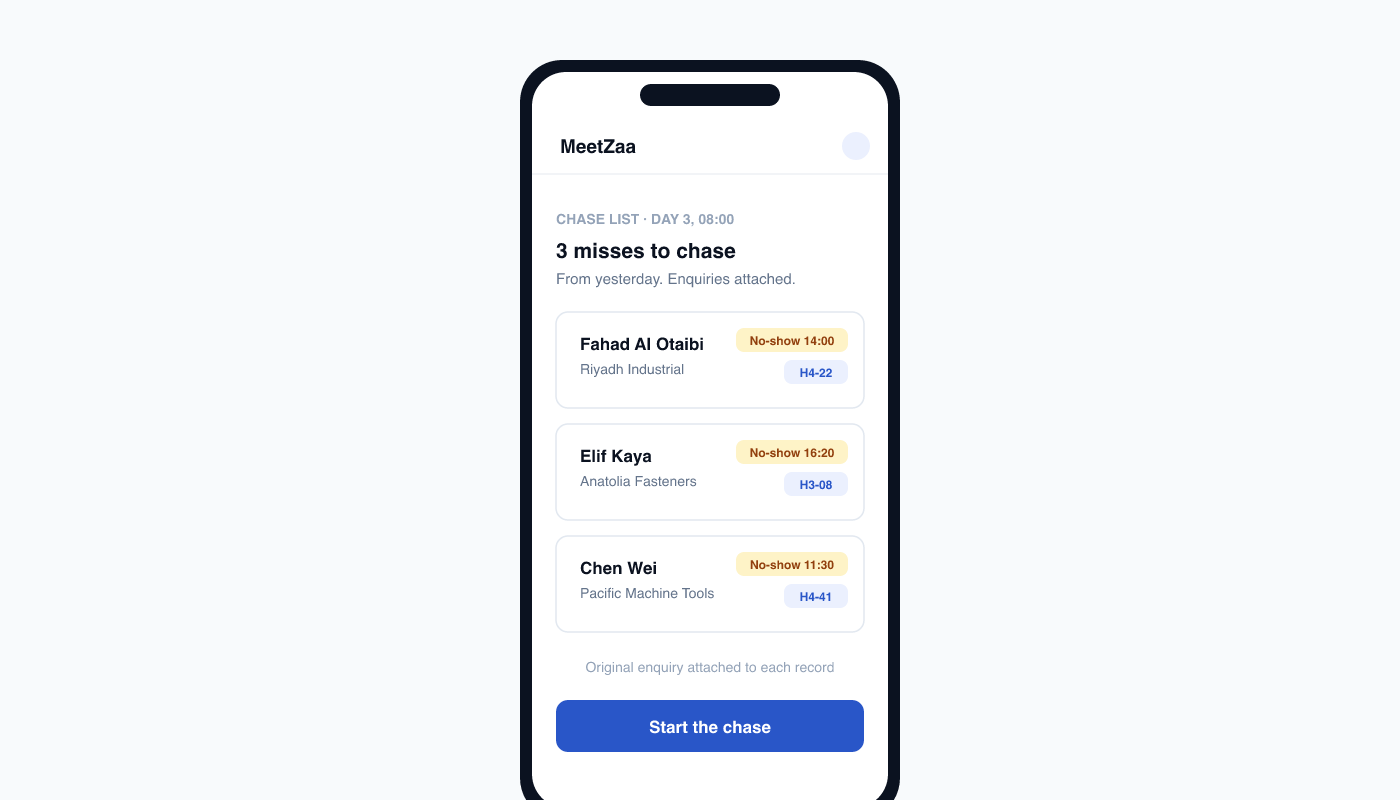
That is the half MeetZaa was built for. A rep taps No-show and the meeting is kept, not deleted, with the buyer's original enquiry still attached. Next morning the buyer is on the chase list with their stand number.
The evening's drafted follow-up is written from what is on the record: a miss and an enquiry, not a meeting that never happened. Plans start from $99 per show, on the pricing page.
MeetZaa keeps the meeting that did not happen: the no-show stays on the record, joins the next morning's chase list, and carries the buyer's original enquiry with it.
Fifteen minutes before your next show
Three decisions, made this week, change what the next empty chair costs.
- 1Decide where a missed meeting gets written down, because the printed schedule will not do it.
- 2Write the two-slot rebook message once and save it where every rep can send it in thirty seconds.
- 3Name the person who owns the chase each morning at 08:00, before the aisles fill.
Do those three and the next no-show is not a lost deal. It is a meeting that moved.
Questions exhibitors ask about trade show no-shows
4What do you do when a trade show meeting is a no-show?
Send a short message within the hour with your stand number and two new times, record the miss so it can be chased, send a same-evening follow-up written for a miss rather than a meeting, and look for the buyer at the show the next morning. The buyer is usually still in the building, which makes this the easiest meeting you will rebook all year. MeetZaa records the miss with one tap when a rep marks No-show.
What is a typical no-show rate for booked trade show meetings?
Published scheduling benchmarks put show rates for pre-booked stand meetings at 80 to 90 percent, so one or two in ten booked meetings end as no-shows. Meetings booked during the show itself hold up better, at 90 to 95 percent. A stand that books 30 meetings should plan for three to six empty chairs.
How do you reduce no-shows for stand meetings?
Send a real calendar invite with the hall and stand number in the title, reconfirm on the morning of the meeting with an easy way to move the slot, tell the buyer who they will meet, and keep your own side punctual. Prevention brings the rate down; a recorded chase recovers most of the rest.
How soon should you follow up after a missed meeting at a show?
Within the hour, briefly. At a show the buyer is often still in the building, so a short message with your stand number and two open slots can rebook the meeting the same day. Follow with an evening email that references their original enquiry and offers tomorrow morning at the stand or a call after the show.
Walk out of the show with every lead already moving
Scan the card, say what was discussed, and the follow-up is drafted before your rep reaches the next stand. Works offline.
Keep reading
Best Trade Show Lead Capture Apps in 2026
An honest comparison of Blinq, iCapture, Captello, Momencio, Cvent LeadCapture and MeetZaa — what each costs, who each suits, and where scanner rental still wins.
Arab Health exhibitor guide: capturing high-value medical leads
An Arab Health exhibitor guide for 2027, now World Health Expo Dubai, with the dates, a regulatory-buyer checklist, and how to capture high-value leads.
How to capture better leads at a trade show, not just more leads
More scans is not more pipeline. Here is the quality capture framework, the volume-versus-depth trade-off, and why capturing better beats capturing more.