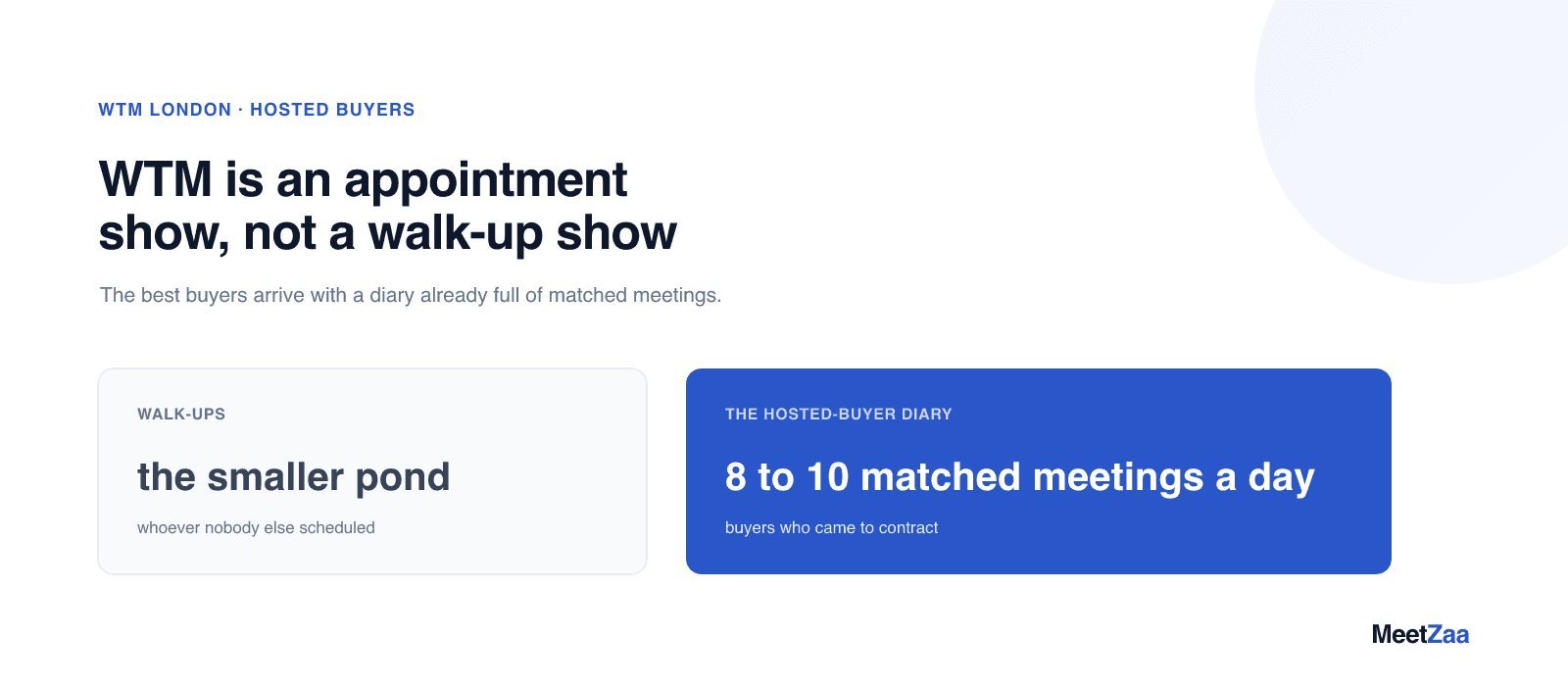
WTM London is not a walk-up show. Its centre of gravity is the hosted buyer programme, where qualified travel buyers arrive with a diary of pre-scheduled appointments, matched to exhibitors before they land. If you are not in that diary, you are working the aisles at a show that was built around the calendar.
But being in the diary is only the start. A full schedule of meetings feels like success, and then most of them lead nowhere, because the meetings that were held were never converted. The win at WTM is not a busy diary. It is a funnel that carries a matched meeting all the way to a contract.
This guide is that funnel: how the hosted buyer programme works, where meetings leak out of it, and the two stages you actually control.
WTM is an appointment show
The hosted buyer programme is the engine. The organiser recruits qualified buyers, and a matchmaking system books them into exhibitor diaries by appointment, typically eight to ten pre-scheduled meetings a day per buyer, each matched to a stated purchasing interest.
The scale is the point. WTM London runs on tens of thousands of these appointments across three days, which is why an exhibitor who relies on walk-ups is fishing in the smaller pond.
The best buyers are the busiest, and their days are booked. A senior buyer from a target source market is in back-to-back appointments, so the only reliable way to meet them is to be in the diary. Wait for them to wander up to your stand and you will mostly meet the people nobody else scheduled.
pre-scheduled at WTM London in a single edition, the appointment engine of the show
So the first move is to be in the diary, with the right buyers, through the matchmaking. But a meeting on the calendar is a long way from a contract, and everything between the two is a funnel that leaks at every stage.
The buyer/seller meeting funnel
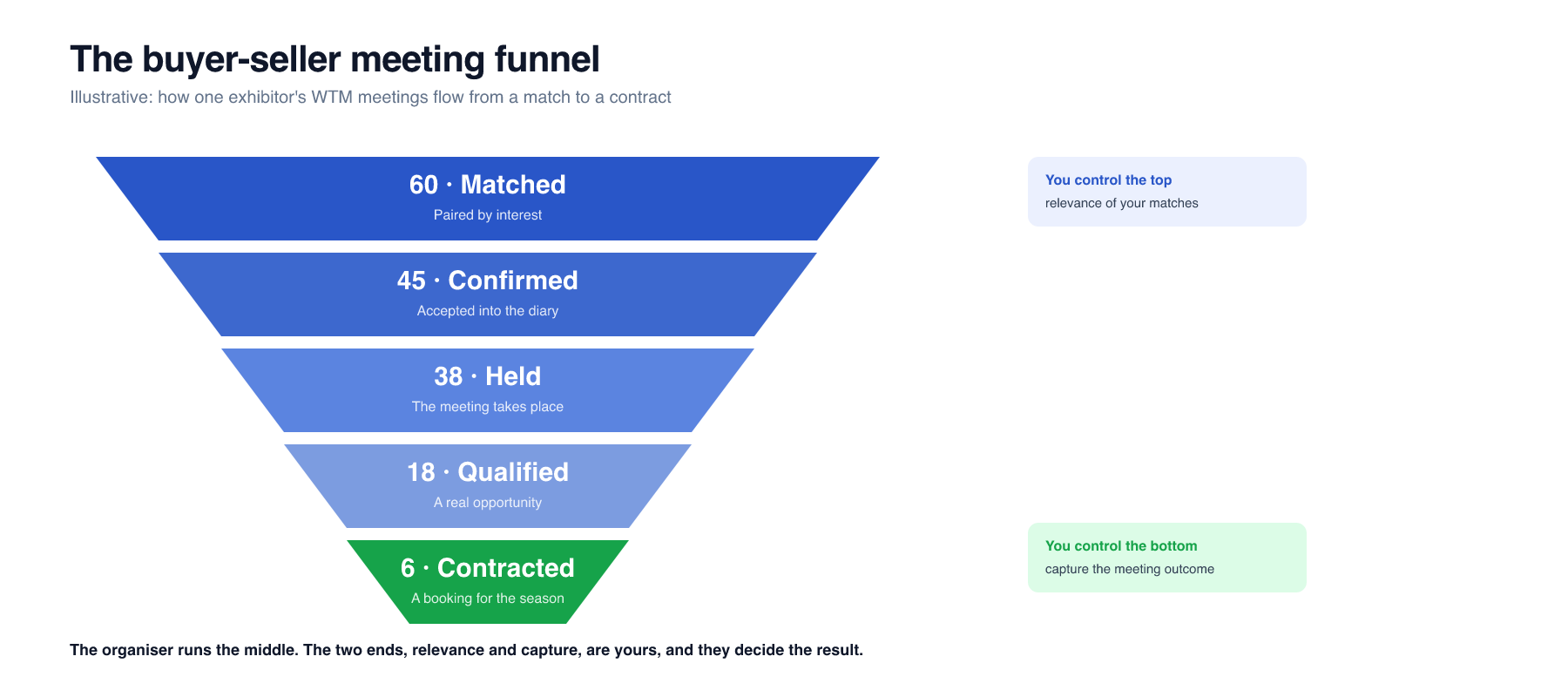
Here is the buyer-seller meeting funnel, the path a WTM meeting takes from a match to a booking, and the drop-off at each step.
| Stage | What happens | Where it leaks |
|---|---|---|
| Matched | The system pairs you with a buyer by interest | Loose matches waste a slot |
| Confirmed | The appointment is accepted into the diary | Low-relevance meetings get declined |
| Held | The meeting actually takes place | No-shows and overruns |
| Qualified | It is a real opportunity, not a courtesy | Weak matches never had intent |
| Contracted | It becomes a booking for the season | The outcome was never captured |
Read down the funnel and two things decide how much comes out of the bottom. How relevant your matches are at the top, which sets how many held meetings are real opportunities. And whether you capture the outcome at the bottom, which decides how many qualified meetings become contracts.
The two stages you actually control
Most of the funnel is run by the organiser. The matchmaking engine, the diary, the recruitment of buyers, all of that is theirs. You control two stages, and they happen to be the two that decide the result.
The first is relevance, at the top. The matchmaking is only as good as the profile and requests you put into it, so a vague profile fills your diary with polite meetings that never had intent. A precise one, naming your markets and what you sell, fills it with buyers who can actually contract.
This stage is won weeks before the show, not on the day. The exhibitors with the best diaries are the ones who filled in a precise profile and sent proactive meeting requests early, while the vague profiles waited to be matched with whoever was left over.
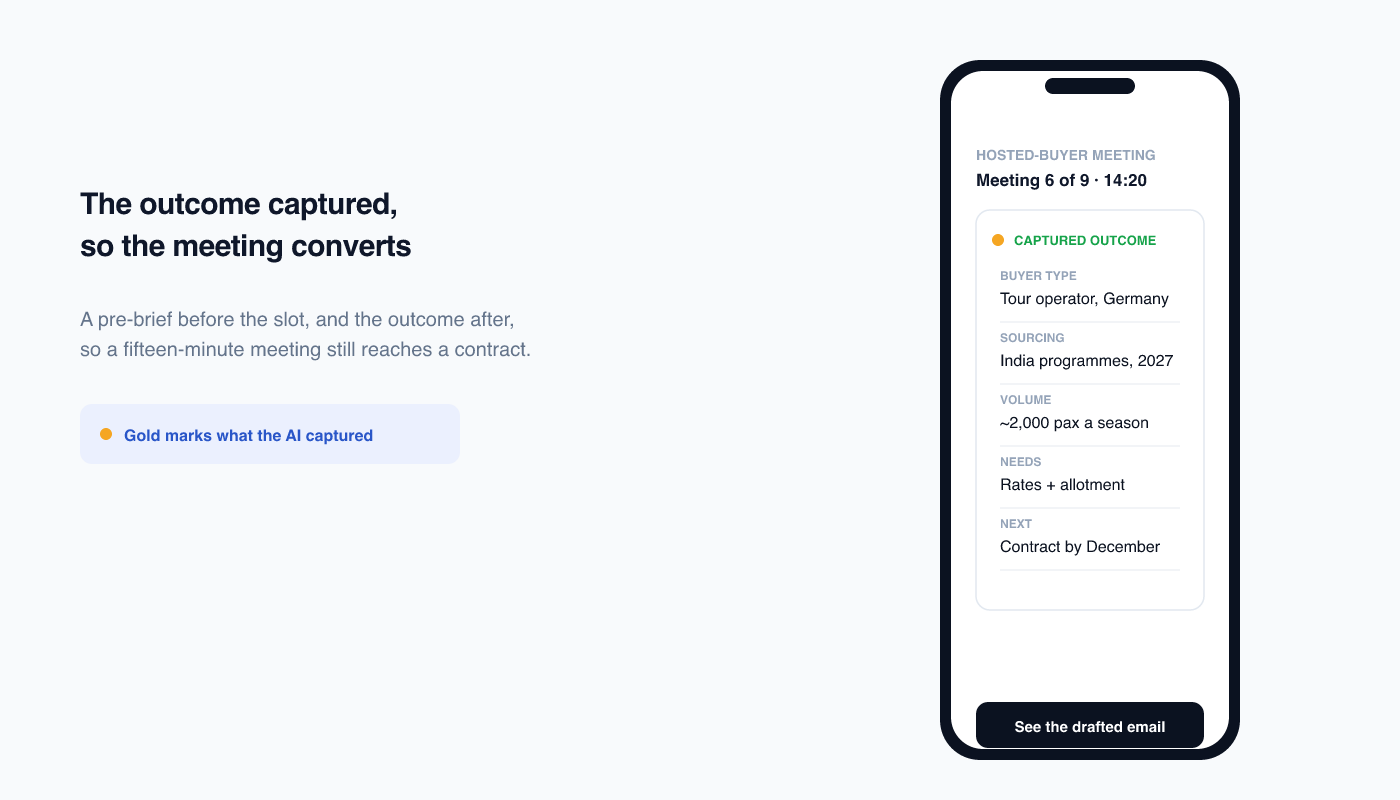
The second is capture, at the bottom. A held meeting whose outcome nobody wrote down leaks out of the funnel exactly like a no-show, except it cost you a slot. What the buyer wanted, which markets, which season, what you agreed, that is the difference between a held meeting and a contracted one.
A full diary is not the win. A converted funnel is.
This is where MeetZaa fits an appointment show. The rep gets a pre-meeting brief for each scheduled buyer, and after the meeting a thirty-second voice note captures the outcome: the markets, the season, the next step, as a scored lead with the follow-up drafted.
The organiser fills your diary. Capturing what happens in it is the part that reaches a contract, and it is entirely on your side of the line.
Do the maths on a WTM diary. Say sixty matched meetings become thirty-eight held. If you can recall the outcome of only twelve, the funnel narrows to a handful of contracts, not because the meetings were bad, but because the ones you could not remember never made it down the funnel.
The meeting itself is short, so make it count
Between the two stages you control sits the meeting, and at an appointment show it is short, often fifteen to twenty minutes, with the next buyer already waiting. That changes how you run it.
Read the buyer's profile before they sit down, so the slot is not spent working out who they are and which markets they serve. Have your markets, rates and availability ready to answer, because a buyer with eight more meetings that day will not wait for you to check and come back.
And leave the last minute for capture. The moment the buyer stands up, the detail starts fading and the next one arrives, so the outcome has to be recorded there, not reconstructed on the flight home. A short slot captured beats a long conversation forgotten.
How to work the funnel at WTM
Winning an appointment show is about the two stages you own, worked deliberately.
- 1Apply early and set your matchmaking profile precisely, naming your markets and what you sell.
- 2Request the specific buyer types and source markets you want, rather than waiting to be matched.
- 3Prepare per meeting, using the buyer's profile, so the slot is not spent getting oriented.
- 4Capture the outcome of every meeting on the spot: markets, season, next step.
- 5Follow up by stage within 48 hours, hottest first, before the buyer contracts elsewhere.
WTM rewards the exhibitors who treat the hosted buyer programme as a funnel to convert, not a diary to fill. Get relevant meetings in at the top, capture every outcome at the bottom, and the appointments turn into the season's contracts, rather than a full calendar you cannot remember a week later.
Questions exhibitors ask about WTM hosted buyer meetings
5How does the WTM London hosted buyer programme work?
The organiser recruits qualified travel buyers and uses a matchmaking system to book them into exhibitor diaries by appointment, typically eight to ten pre-scheduled meetings a day per buyer, each matched to a stated purchasing interest. Exhibitors set a profile and request meetings, and the confirmed appointments appear in a shared diary.
How do you get matched with the right buyers at WTM?
Through your matchmaking profile and your meeting requests, which is the part you control. Name your source markets and exactly what you sell, and request the buyer types you want rather than waiting to be matched. A precise profile fills your diary with buyers who can contract; a vague one fills it with courtesy meetings.
How many meetings do hosted buyers have at WTM?
A hosted buyer's daily schedule is typically eight to ten pre-scheduled appointments with matched exhibitors, and WTM London runs tens of thousands of these meetings across the show. As an exhibitor, your diary can fill quickly, which is why converting the meetings matters more than simply having them.
What should you do after a WTM meeting?
Capture the outcome immediately, while it is fresh: which markets the buyer serves, which season they are contracting for, and what you agreed. Then follow up within 48 hours referencing those specifics. A held meeting with no captured outcome leaks out of your funnel just like a no-show.
Is the hosted buyer programme worth it for exhibitors?
For most travel exhibitors it is the main reason to do WTM, because it puts qualified, matched buyers in your diary rather than leaving the show to walk-up chance. The return depends on the two stages you control: the relevance of your matches, and whether you capture and follow up every meeting's outcome.
Walk out of the show with every lead already moving
Scan the card, say what was discussed, and the follow-up is drafted before your rep reaches the next stand. Works offline.
Keep reading
Best Trade Show Lead Capture Apps in 2026
An honest comparison of Blinq, iCapture, Captello, Momencio, Cvent LeadCapture and MeetZaa — what each costs, who each suits, and where scanner rental still wins.
Arab Health exhibitor guide: capturing high-value medical leads
An Arab Health exhibitor guide for 2027, now World Health Expo Dubai, with the dates, a regulatory-buyer checklist, and how to capture high-value leads.
How to capture better leads at a trade show, not just more leads
More scans is not more pipeline. Here is the quality capture framework, the volume-versus-depth trade-off, and why capturing better beats capturing more.